

Comprehensive Guide to Steel Structure Fabrication & Pre-engineered Buildings
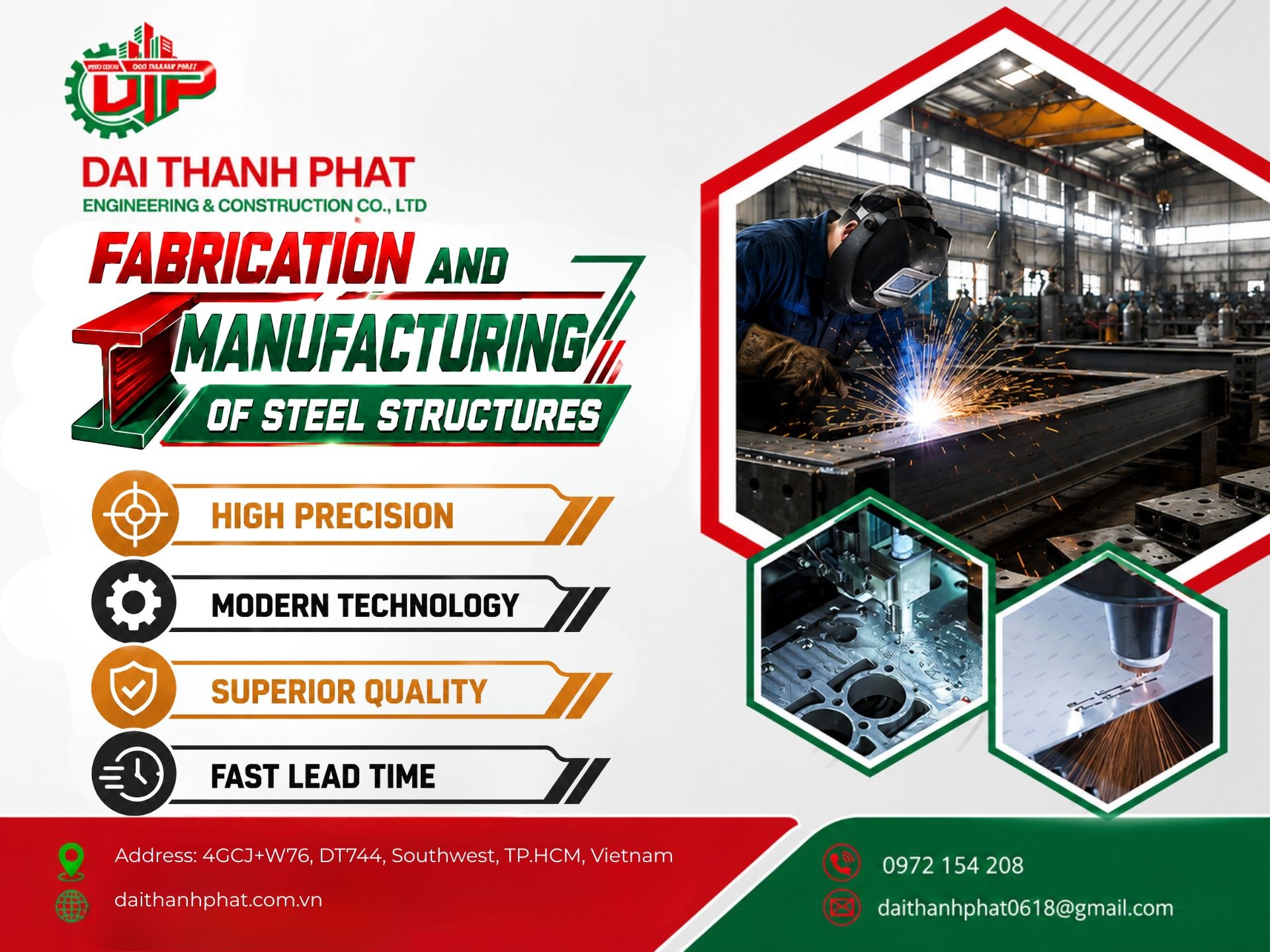
Steel structure fabrication is the most crucial stage. It directly determines the durability of pre-engineered building projects. Creating standard steel components requires a closed manufacturing process. Businesses must apply modern machinery technology. Strict adherence to technical standards is mandatory. This article provides a comprehensive overview of the manufacturing process. It helps investors control quality effectively. As a result, construction costs are maximally optimized.
1. Overview of Steel Structure Fabrication & Pre-engineered Buildings
Many people remain vague about specialized terminology. Below are the most basic and understandable definitions. You will grasp the foundation of the industrial construction sector.
What is steel structure fabrication?
Steel structure fabrication is a mechanical process. It transforms raw steel materials into specifically shaped components. Steel plates and sections are cut, welded, and assembled. The goal is to create load-bearing parts for the structure. These parts include columns, beams, trusses, and purlins. This process is carried out entirely at the factory.
The importance of industrial steel components
Steel components act as the "skeleton" of the building. They possess extremely strong load-bearing capacities. Steel can span very large spatial distances. This helps the factory become spacious and airy.
Besides, using steel helps shorten construction time. The parts are pre-made at the workshop. When brought to the site, workers only assemble them. Investors will save a lot of money. Expanding the factory scale later is also extremely easy.
2. Latest Steel Structure Fabrication Standards 2026
A reputable workshop must adhere to strict regulations. This ensures absolute safety for users. Below are the most core standards.
Strict requirements for input materials
Material is the vital element of every project. The selected steel must be high-strength steel. Popular steel grades today are SS400, Q345, and A36. Every batch imported to the workshop must be inspected carefully.
The steel must not be rusty or warped. Most importantly, it must have full CO/CQ certificates. These are documents proving the origin and quality of materials. If materials are poor, the entire project will be seriously affected.
Technical standards applied in manufacturing
The production process cannot be done intuitively. Engineers must closely follow national and international standard systems. In Vietnam, TCVN standards are widely applied.
In addition, large projects often require American standards. The most popular is the AISC design standard. For welds, the AWS standard is used as a benchmark. Applying international standards helps improve building lifespan.
Allowable tolerances in mechanical fabrication
Tolerance is the acceptable level of error. In precision mechanics, errors must be extremely small. The length, deflection, and tilt of the steel all have clear limits.
If errors exceed the limit, components cannot be assembled. QC (Quality Control) engineers must use electronic gauges for measurement. All parameters must perfectly match the design drawings (Shop drawings).
3. Details of the 6-Step Professional Steel Fabrication Process
The production process requires continuity and extreme precision. Below are 6 basic steps to manufacture a complete component using highly descriptive language. Every step is strictly monitored through documentation.
Step 1: Cutting steel (Nesting) according to drawings
This is the first stage in the fabrication workshop. Intact steel plates are brought into the cutting area. Engineers will load design drawings into the computer system.
CNC, plasma, or oxy-fuel cutting machines will run automatically. Steel billets are cut into desired shapes. The cutting edge must be smooth, without bumps or burns. These steel pieces are called preparation billets.
Step 2: Gusset plate fabrication and bolt punching
After cutting, the steel is moved to the drilling area. Gusset plates need to be drilled to insert bolts later. Drilling holes must achieve absolute precision.
If a hole is off by one millimeter, on-site assembly will fail. Workers use magnetic drills or hydraulic punching machines. Hole locations are pre-programmed on the technical drawings.
Step 3: Fitting and assembling component parts
This step is like playing with basic building blocks. Individual steel billets are placed on a flat fitting table. Mechanics will assemble them into H, I, or box shapes.
To hold the steel pieces fixed, workers will tack weld temporarily. This weld is small, often called a spot weld. Ensure the component is shaped accurately according to drawings. The fitting process requires high concentration and meticulousness.
Step 4: Final welding and ultrasonic testing
This is the heart of the entire mechanical fabrication process. Assembled components will be moved into the automatic welding machine. Most workshops use submerged arc welding technology. The weld will penetrate deeply into the solid steel core.
After welding, QC engineers will start working. They use specialized ultrasonic machines to scan along the weld. If there are air bubbles or hidden cracks, the machine alerts immediately. Defective components must be repaired right away.
Step 5: Thermal straightening and surface cleaning
Extreme heat during welding will slightly warp the steel. Therefore, components must pass through a mechanical straightening machine system. Or workers will use specialized heating torches to straighten them.
Next is the extremely crucial surface cleaning step. Components are put directly into the shot blasting booth system. Steel shots hit the surface at very high speeds. Rust, welding slag, and dirt are completely blown away. The steel surface becomes rough and shiny, meeting SA 2.5 standards.
Step 6: Anti-rust painting and finishing
The final step is putting a new coat on the component. Cleaned steel must be painted immediately to prevent oxidation. Typically, components will be coated with quality anti-rust paint. Then, workers will spray one or two more colored outer coats.
Paint film thickness is accurately measured with a specialized gauge. Some specific projects may require hot-dip galvanizing. After the paint film dries completely, components are coded. Finally, they are carefully wrapped in plastic film and await transportation.
4. Steps for Constructing Pre-engineered Buildings
Fabrication at the workshop is only half the journey. The other half is bringing components to the project for assembly. On-site construction happens very quickly.
Preparation work and foundation construction
Even though the factory is made of steel, the foundation must be concrete. This helps transfer the load of the entire building into the ground.
Workers proceed to excavate and construct pad or strip foundations. The most important point is accurately positioning the foundation bolts. They must be carefully aligned using electronic total stations. They are the strong bridge between concrete foundations and steel columns.
Erecting the main steel frame system (Columns and Trusses)
When the concrete foundation cures and reaches strength, cranes move in. Cranes will lift each steel column into its exact designed position. Workers firmly attach the column base to pre-embedded foundation bolts. Tall standing steel columns create a solid basic frame.
Next, the crane system will lift steel trusses high up. Assemblers sit on forklifts to connect trusses to columns safely. They use high-strength bolts to tighten them securely. The main frame is formed and can stand independently on the ground.
Installing bracing systems, purlins, and roofing panels
To make the factory space more rigid, workers install cable bracing systems. This bracing system helps resist storms and eliminates lateral forces. Z or C-shaped purlins are attached to the roof and walls.
Purlins are the skeletal structure for fastening roofing sheets. Finally, workers will pull metal sheets up to cover the roof and walls. Technicians will install additional gutters, downspouts, and louvers. The factory project is completed and ready for operation.
5. Steel Structure Fabrication Quotes & Choosing Reputable Workshops
Construction costs are always a headache for investors. Understanding price structures helps you manage budgets better. Below is extremely useful information about market quotes.
Reference price list for industrial steel component production
Component prices depend on many external factors. Raw steel prices can fluctuate and change daily. The complexity of design drawings directly affects fabrication unit prices. You can refer to the basic 2026 price range right below.
Note: Quotes are for reference purposes only at the current time.
| Work Item | Unit | Reference Price Range (VND) |
| Supply of steel plate/section materials | Kg | Contact for actual quote |
| Component fabrication fee | Kg | Contact for actual quote |
| Shot blasting and 2-coat anti-rust painting | Kg | Contact for actual quote |
| Transportation cost to the construction site | Trip | Contact for actual quote |
| Complete on-site erection | Kg | Contact for actual quote |
Golden criteria for choosing a turnkey contractor
You shouldn't just look at cheap quotes online. Prioritize contractors with direct mechanical manufacturing workshops. This helps you avoid paying extra fees for intermediary brokers.
Ask contractors to present a very detailed company profile. Check the practicing certificates of the entire design engineering team. You should also take time to visit their factory directly. Seeing the actual machinery system with your own eyes brings absolute peace of mind.
6. Frequently Asked Questions (FAQ) About Steel Fabrication
Throughout our consulting process, we receive many inquiries. Below are the most common questions from B2B investors. Let's look at detailed answers from leading industry experts.
How long does steel component fabrication take?
Completion time depends heavily on the actual project scale. For a factory covering about 5000 square meters, production takes 20 to 30 days. Workshops equipped with automatic machinery will work much faster than this number. Finalizing design drawings early also helps accelerate component production.
What is the difference between pre-engineered and concrete buildings?
Pre-engineered steel buildings have an assembly speed up to 50% faster than concrete. The steel frame weight is lighter, significantly minimizing foundation costs.
However, concrete buildings have better fire resistance than steel. To overcome this, steel surfaces are often coated with specialized fire-resistant paint. Steel buildings are best suited for light industrial projects and logistics centers.
How to inspect the quality of structural welds?
Component welds are always the most sensitive and vulnerable spots. Our naked eyes cannot see through the solid steel core. The best way is using specialized UT (Ultrasonic Testing) methods.
Alternatively, workers can use MT (Magnetic Particle Testing) methods on the surface. These modern methods detect even tiny hairline cracks. You should consider hiring an independent inspection agency to cross-check.
Conclusion: Choosing the Optimal Construction Solution for Businesses
Steel structure fabrication and erection is wonderful engineering art. A professional process does not just create beautiful architectural works. It also brings absolute safety and long-term economic benefits. Understanding manufacturing steps clearly helps investors become much more confident.
If you are incubating a new factory construction project, act now. Do not hesitate to connect directly with our expert team. We are always ready to provide consulting support for you completely free of charge.
In-depth consultation contact information:
Hotline / Zalo: 0972154208
Email: daithanhphat0618@gmail.com
Workshop Address: Land Parcel No. 3320, Map Sheet No. 13, Rach Bap Residential Area, Long Nguyen Ward, Ho Chi Minh City, Vietnam.